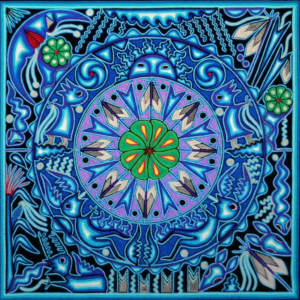
Guide to Huichol Art: The Mystical Language of Beads and Yarn
The Huichol art (or properly, wixárika art) it is not simply a decorative craft technique; it is a living cosmogony expressed on canvases of color and light. Originating from the Sierra Madre Occidental of Mexico —mainly from the states of Jalisco, Nayarit, Durango, and Zacatecas—, the Wixáritari (plural of Wixárika) have preserved intact a sacred visual language that serves as a bridge between the earthly world and the divinities.
In this guide you will delve into the secrets, the traditional techniques, and the profound mysticism behind each piece of huichol handicrafts.
What is Huichol Art and what is its origin?
The origin of this art is purely ceremonial. Before the arrival of glass beads and modern threads, the Huichol people were already creating complex offerings using natural elements such as stones, seeds, shells, feathers, and plant dyes.
With the introduction of new materials over the centuries, these offerings evolved into the dazzling contemporary works we now admire in galleries around the world. For the Wixárika people, the act of creating art is a form of prayer and a visual record of the visions obtained by the shamans (mara’akate) during their sacred rituals.
The Two Main Techniques of Wixárika Art
The art of this community is mainly divided into two branches of astonishing craftsmanship, both using the Campeche wax (natural beeswax) as the ancestral adhesive that secures the materials onto wood.
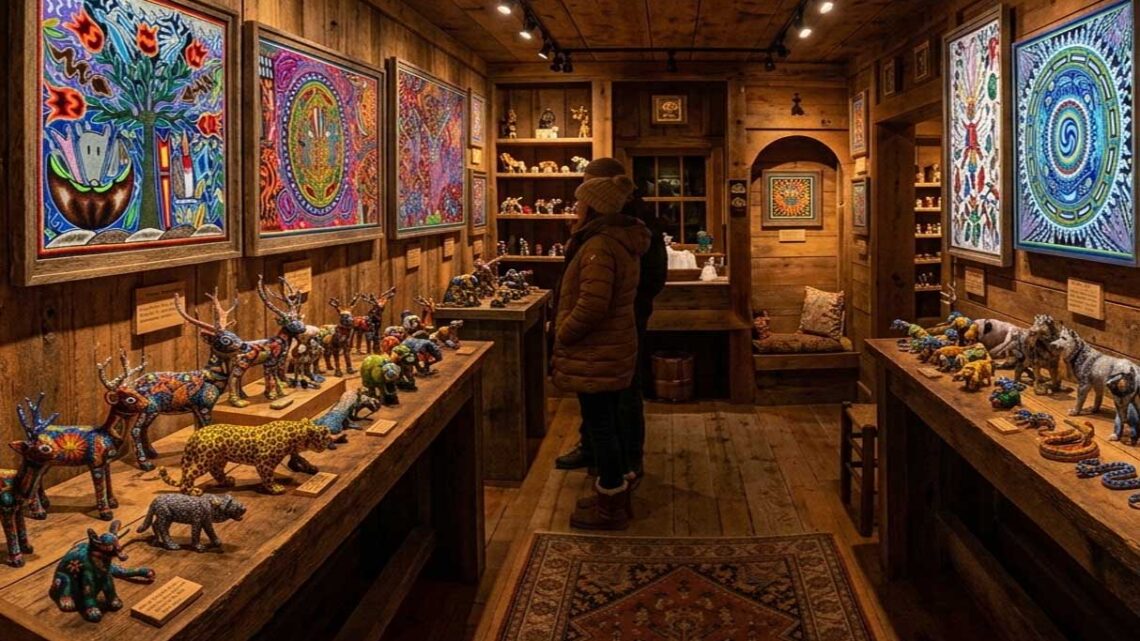
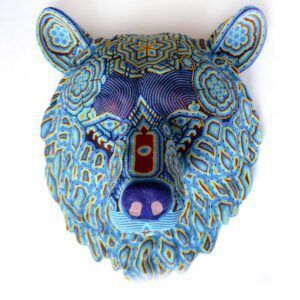
In this technique, the artisan places tiny glass beads (chaquiras) one by one onto a hand-carved wooden surface or clay previously covered with wax. Each bead is symbolically compared to a corn seed, representing water and life itself. This work requires infinite patience and flawless symmetry, carried out without prior lines or sketches.
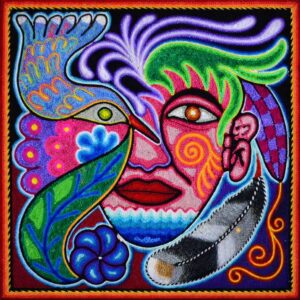
The nierikate (plural of nierika) are the famous paintings made by pressing colored yarn or wool threads onto waxed wooden boards. A nierika it is, literally, a “transdimensional mirror” or a mystical threshold. Through these threads, the artists narrate cosmogonic myths, initiation rituals, and passages from their daily life in the mountains.
The Meaning of Huichol Symbols
No pattern in an authentic piece is merely aesthetic. Each element tells a part of the sacred story of the universe:
The Blue Deer (Kauyumari): The most important messenger of the gods, the spiritual guide who represents wisdom and the origin of life.
The Peyote (Hikuri): The sacred cactus that bestows mystical vision, spiritual clarity, and direct connection with the divine plane.
The Corn (Imari): The sustenance of earthly life, closely linked to the water cycle and to the physical survival of the community.
The Eye of God (Tsikuri): A five-point symbol (the four cosmic directions and the spiritual center) used for protection, spiritual guidance, and the care of children.
The Snake: Associated with rain, the fertility of the earth, lightning, and the flow of vital energy.
Frequently Asked Questions about Huichol Art (FAQ)
For those who wish to delve deeper or acquire a piece, here are the key questions and answers that define the authenticity and value of this tradition:
Where is Huichol art made?
Although the Wixárika people mainly reside in the remote Sierra Madre Occidental (in the mountainous borders of Nayarit, Jalisco, Durango, and Zacatecas), many artisans have settled in urban and tourist centers to showcase and market their works.
What is the difference between handicraft and Huichol gallery art?
While utilitarian or commercial crafts often repeat simpler geometric patterns for everyday accessories, gallery pieces are unique and unrepeatable works. In the latter, the Wixárika artist conveys a complex and personal spiritual narrative, using microscopic beads or ultra-fine threads in a process that can take months of dedication.
How can you tell if Huichol art is original and authentic?
Authentic art is characterized by organic symmetry (never perfect nor industrialized), the traditional use of Campeche wax as a binder (which emits a slight natural honey scent), and resin or epoxy glue; as well as the mystical complexity of its iconography. Moreover, ethical purchasing should be carried out on platforms committed to fair trade such as Tayaupa – Pride of Mexico Collection and direct respect for the creator communities.
Acquire Wixárika Art with Purpose at Tayaupa – Orgullo de México Collection
Behind every vibrant color there is a family, a centuries-old tradition, and a prayer for the balance of the world. In our gallery Pride of Mexico by Tayaupa, we work closely with Wixárika master artisans to bring you exclusive and certified works of the highest quality.
By acquiring a piece in our store, you not only decorate your space with a jewel of Mexican art; you also actively support the preservation of cultural heritage and the fair economy of the communities in the Sierra Madre Occidental.
Explore our Exclusive Huichol Art Collection here Pride of Mexico Collection – Huichol Art