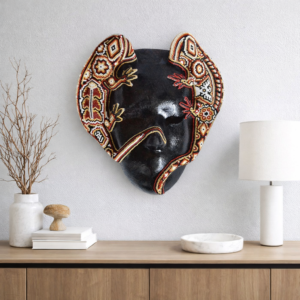
A map of light and spirit
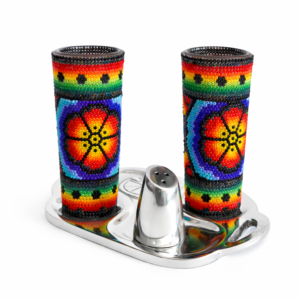
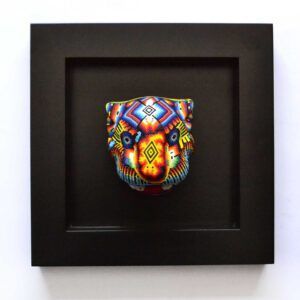
The people Wixárika (Huichol) has woven for centuries a symbolic universe where Colors are not decoration, but a word. The pieces of beads and yarn function as ritual maps: they guide pilgrimages, record visions, and sustain the relationship between the human and the divine. Geographic origin: Nayarit, Jalisco, Durango and Zacatecas.
The sacred palette: colors and their voices
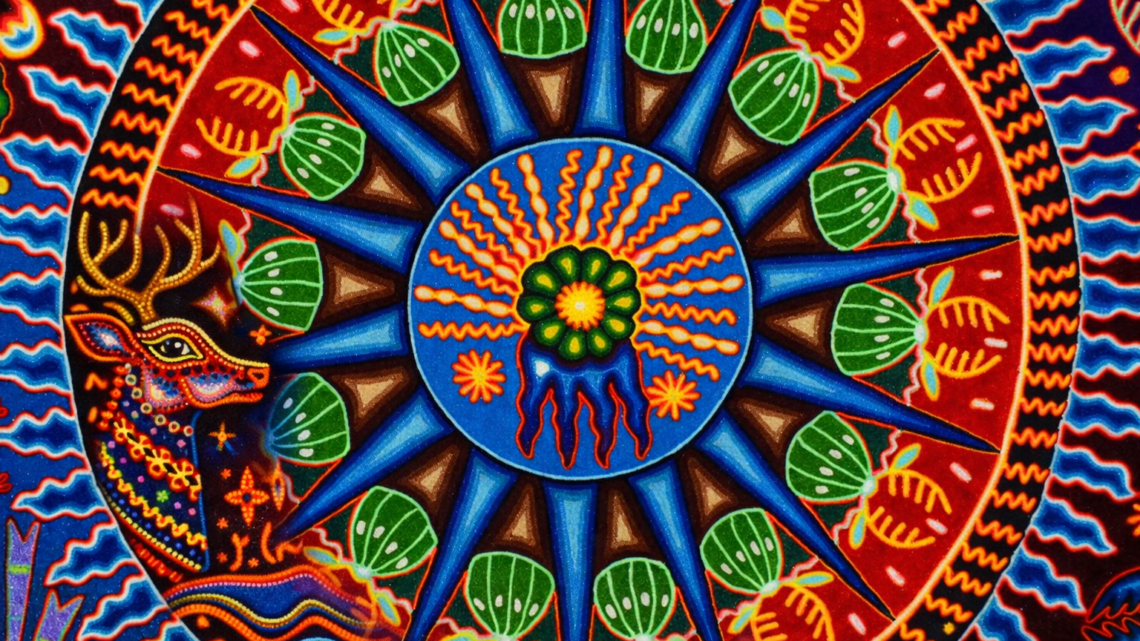
- Blue — Water and the spiritual world. It evokes rain, rivers, and the presence of the guide deer, mediator between humans and deities.
- Red — Fire, blood and offering. Vital energy that protects and activates communication with the gods.
- Orange and Yellow — Sun and corn. Symbols of abundance, harvest, and the light that nourishes life.
- Green — Earth and fertility. It represents growth, balance, and the health of the natural environment.
- Black — Transformation and protection. It is not absence, but the cycle that allows rebirth and the protection of the sacred.
Symbols that engage with color
The colors are combined with motifs such as peyote, deer, sun and corn to narrate pilgrimages (Wirikuta), healings, and shamanic visions. Peyote, in particular, is a bridge to knowledge and appears in numerous pieces as a ritual axis.
Mystical tone: how to read a piece
Reading a Huichol work is to enter a symbolic trance: observe the center (power point), follow the lines that connect figures and pay attention to the contrast of colors; Each contrast is a dialogue between forces (water-fire, life-death). This interpretation respects the artisan's ritual intention, which often reproduces sacred visions.
Appropriation and commercial exploitation These are real threats: many pieces are sold out of context; in addition, extractive projects put sacred territories like Wirikuta at risk.
Color in Huichol art is living memory: Sharing its meaning is an act of respect when it is done with context, credit, and community support.